
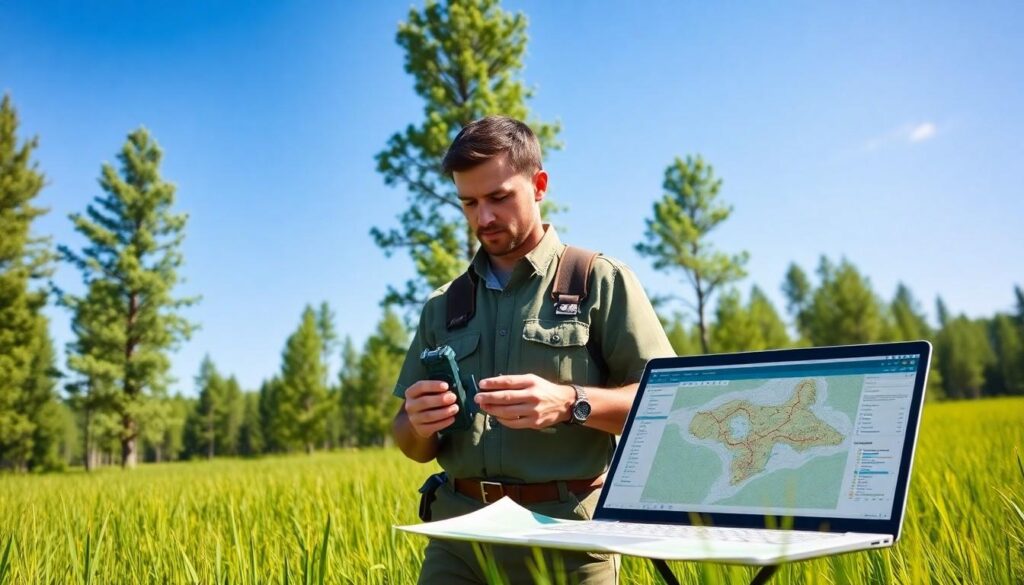
Imagine a world where trees can text you their health status. While that might be a stretch, GIS technology is the next best thing for forestry. By harnessing Geographic Information Systems, foresters can monitor and manage forests like never before. This powerful tool allows them to visualize data, track changes over time, and make informed decisions that keep our beloved forests thriving.
From mapping tree species to analyzing soil conditions, GIS technology transforms the way forestry professionals approach sustainability. It’s like having a crystal ball for forest management—one that not only helps protect our green giants but also ensures they keep providing us with fresh air and shade. With GIS in their toolkit, foresters can truly embrace a sustainable future, one pixel at a time.
Overview of GIS Technology in Forestry
GIS technology plays an essential role in the management of forests by offering advanced mapping and analysis tools. Foresters utilize GIS to create detailed maps, which display tree species distribution, soil types, and various environmental factors. Data visualization enables forestry professionals to identify trends, monitor health, and assess growth patterns effectively.
These systems provide valuable insights into forest dynamics. They facilitate the evaluation of habitats, allowing for more precise conservation strategies. Geographic Information Systems help in tracking the impact of climate change on forests, aiding in the assessment of vulnerabilities and resilience.
Decision-making improves through the integration of real-time data collected via satellite imagery and aerial surveys. Foresters can analyze large datasets quickly, identifying areas that require immediate attention or management interventions. Enhanced spatial analysis capabilities allow the forecasting of potential pest outbreaks or disease spread.
Engagement with local communities increases when GIS technology is applied. By sharing visual data and findings, forestry professionals can collaborate with stakeholders to promote sustainable practices. Education initiatives benefit from accessible mapping resources, enhancing public understanding of forestry conservation.
Additionally, the technology supports compliance with environmental regulations. Foresters can document land use changes and assess compliance with sustainability standards more effectively. This level of oversight ensures that forest resources remain intact for future generations.
Overall, GIS technology contributes significantly to the sustainable management of forests, ultimately protecting vital ecosystems while balancing the needs of logging, recreation, and conservation.
Enhancing Forest Management
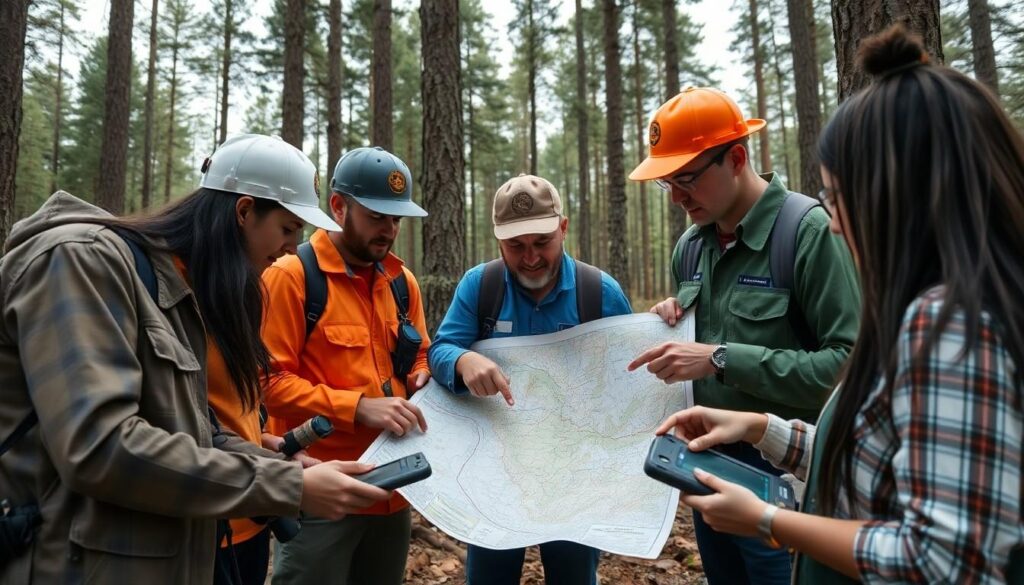
GIS technology significantly strengthens forest management practices, promoting sustainability within forest ecosystems. It provides valuable tools for inventory, mapping, and monitoring.
Inventory and Mapping
Accurate inventory and mapping capabilities empower foresters to make informed decisions. Geographic Information Systems allow the identification of various tree species, their distribution, and quantities. Comprehensive mapping reveals soil types and environmental conditions, facilitating better resource management. Spatial data integration streamlines forest assessments and supports strategic planning. By utilizing GIS, professionals can establish comprehensive databases that enhance forest inventory accuracy. Organized data visualizations help prioritize areas for conservation, logging, or restoration. Ultimately, GIS enables the effective allocation of resources, ensuring sustainable harvests while maintaining ecological balance.
Monitoring Forest Health
Regular monitoring of forest health is crucial for sustainability. GIS technology aids in tracking changes over time, helping foresters detect signs of stress in trees and ecosystems. Enhanced satellite imagery provides insights into growth patterns and environmental impacts. This facilitates early identification of pest outbreaks, disease spread, and climate-related vulnerabilities. Data analysis supports proactive measures that protect forest health, such as targeted pest management or reforestation efforts. GIS applications also support collaboration with environmental agencies, ensuring compliance with health guidelines and sustainability practices. Consistent monitoring through GIS fosters a proactive approach to preserving healthy forests for future generations.
Case Study: GIS in Sustainable Forestry
Geographic Information Systems (GIS) technology plays a vital role in sustainable forestry management. This technology provides essential tools that enhance forest planning and conservation efforts.
Application of GIS in Forest Planning
Foresters utilize GIS to streamline forest planning processes. By analyzing spatial data, it identifies optimal areas for logging and conservation. Detailed maps generated by GIS reveal tree species distribution and soil types, facilitating targeted management strategies. In addition, real-time data from satellite imagery helps foresters monitor forest health, making it easier to detect changes over time. Using this information, professionals can prioritize interventions to maintain a balanced ecosystem. Comprehensive assessments enhance decision-making, ensuring sustainable practices are incorporated into forest management.
Impact on Conservation Efforts
GIS significantly boosts conservation strategies in forestry. It enables detailed habitat mapping, highlighting regions that require protection. By assessing environmental factors and identifying critical habitats, professionals create effective conservation programs. Real-time data visualization allows for prompt responses to climate changes and ecological threats. Additionally, GIS fosters collaboration with local communities, sharing important data on forest health. Engaging stakeholders in conservation efforts encourages shared responsibility for forest sustainability. Enhanced analysis capabilities also support compliance with environmental regulations, guiding forestry professionals in maintaining sustainable practices over time.
Challenges and Limitations
GIS technology faces several challenges in forestry management. Data accuracy often depends on the quality of the sources used. Satellite imagery might be outdated or affected by cloud cover, limiting real-time analysis. Additionally, the integration of various data types, such as soil health and weather conditions, poses compatibility issues, requiring specialized software.
Training personnel in GIS tools is another significant hurdle. Many forestry professionals lack the technical expertise needed to utilize GIS effectively. This skill gap can hinder the successful implementation of GIS in forestry practices. Also, insufficient funding for technology can restrict access for smaller organizations or less affluent regions, limiting the scope of sustainable forestry efforts.
Privacy concerns related to data collection also arise. Stakeholders may resist sharing land-use information, fearing misuse or exposure. Furthermore, over-reliance on technology may lead to neglecting traditional ecological knowledge, which plays a crucial role in forest stewardship.
Another challenge involves the constant evolution of technology. GIS tools and platforms require regular updates and adaptations, which can burden existing staff. Ensuring continuous training and software maintenance can strain resources further.
Lastly, climatic variability presents a limitation. Geographic data can quickly become irrelevant in the face of unpredictable environmental changes. The challenge lies in adapting GIS models to accommodate rapid shifts in climate and ecological responses to these changes.
These challenges necessitate a balanced approach that combines technology with traditional forestry methods while continually addressing data complexities and training needs.
Future of GIS in Forestry
GIS technology continues to evolve, offering enhanced possibilities for sustainable forestry. Innovations in data collection, particularly through remote sensing, empower foresters to monitor forest conditions with greater accuracy. Advanced analytics create opportunities for improved decision-making processes.
Examples of real-time monitoring systems will play a crucial role as they integrate data from satellite imagery and ground sensors. Spatial data analysis will identify patterns and trends, enabling forest managers to respond swiftly to emerging threats.
Communities can also benefit from participatory GIS, which fosters collaboration between stakeholders. Engaging local residents in data collection and interpretation enhances conservation efforts and promotes shared responsibility. Increasingly, open-source GIS platforms make technology accessible, allowing smaller organizations to implement advanced forestry practices.
Training programs will become essential for workforce development. The need for skilled personnel rises as GIS tools develop, ensuring that forestry professionals are equipped to utilize new technologies effectively.
Deployment of predictive modeling represents a significant advancement. It allows foresters to anticipate potential issues such as pest outbreaks or changes in climate, promoting proactive rather than reactive management strategies.
Integrating machine learning and artificial intelligence into GIS workflows will revolutionize data analysis. These technologies enable foresters to derive insights from vast datasets quickly and efficiently, addressing sustainability concerns more effectively.
Overall, the future of GIS in forestry appears promising. Continued focus on technological advancements and education will enhance sustainable management practices, ultimately preserving forest ecosystems for future generations.
GIS technology stands as a powerful ally in the quest for sustainable forestry. By providing detailed insights into forest health and environmental conditions, it empowers foresters to make informed decisions that protect vital ecosystems. The ability to visualize data and monitor changes over time fosters proactive management strategies, ensuring that forests can thrive amidst various challenges.
As GIS continues to evolve, its integration with advanced technologies promises even greater enhancements in forest management. The collaboration between technology and traditional practices will be key to overcoming existing challenges, ultimately leading to healthier forests for future generations. Embracing these innovations will help balance ecological needs with human activities, paving the way for a sustainable future.


